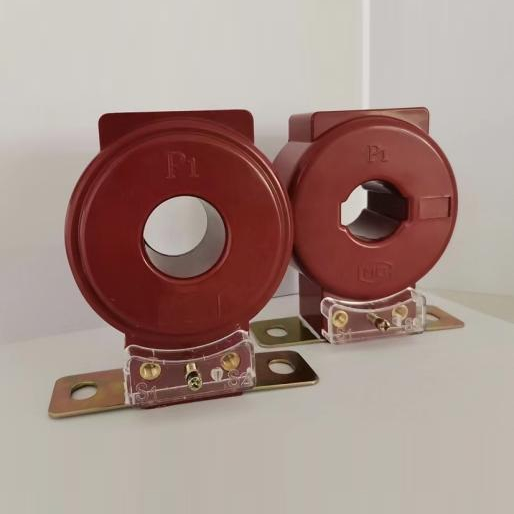
Industrial leakage protection switches play a critical role in ensuring the safety and reliability of electrical systems. They protect both equipment and personnel from dangerous electrical leaks and short circuits. A key component that significantly enhances the performance of these devices is the magnetic core for industrial leakage protection switch. Understanding how magnetic cores function and contribute to leakage protection can provide insight into their indispensable role in modern industrial electrical systems.
The Function of Industrial Leakage Protection Switches
Industrial leakage protection switches, also known as residual current devices (RCDs), are designed to detect stray electrical currents caused by insulation failures or accidental contact with live parts. When a leakage occurs, these switches quickly cut off the power supply, preventing electric shocks and potential fires.
The effectiveness of a leakage protection switch largely depends on its sensitivity and speed of response. Without precise detection, even a minor leakage could go unnoticed, leading to serious consequences. This is where magnetic cores for industrial leakage protection switch come into play—they enhance the switch’s ability to sense and react to anomalies in electrical current.
Understanding Magnetic Cores
A magnetic core is a component made from ferromagnetic materials, such as laminated silicon steel or ferrite, which concentrates and guides magnetic fields. In the context of industrial leakage protection switches, magnetic cores are typically used in current transformers (CTs). These CTs monitor the flow of electrical current through a circuit and identify imbalances between the live and neutral conductors.
When the currents in the live and neutral wires are equal, the magnetic field produced in the core cancels out. However, if a leakage occurs, the imbalance generates a net magnetic field in the core. This field induces a voltage in the secondary winding of the current transformer, triggering the switch to disconnect the circuit.
Enhancing Sensitivity and Accuracy
One of the main advantages of using a magnetic core for industrial leakage protection switch is the enhancement of sensitivity and accuracy. Magnetic cores allow the switch to detect even very small leakage currents that might otherwise go unnoticed. High-quality cores with low hysteresis and minimal energy loss ensure that the device can respond rapidly, preventing potential hazards before they escalate.
Moreover, the material and design of the magnetic core can be optimized to improve performance under different operating conditions. For example, ferrite cores are particularly effective at reducing high-frequency noise, ensuring that the switch does not produce false trips due to transient voltage spikes. This reliability is crucial in industrial environments where electrical noise is common.
Reducing Energy Loss and Heat Generation
Industrial systems often operate under high currents, which can generate heat and reduce the efficiency of electrical components. Magnetic cores for leakage protection switches are designed to minimize energy loss through eddy currents and hysteresis. Laminated cores or ferrite cores provide low-resistance paths for magnetic flux, which reduces heat buildup and energy dissipation. This not only extends the lifespan of the switch but also ensures stable performance in demanding industrial applications.
Improving Response Time
The speed at which a leakage protection switch can detect and respond to a fault is critical. A slower response can result in electric shocks or equipment damage. By efficiently channeling the magnetic flux, magnetic cores help the current transformer generate a stronger and faster signal when a leakage occurs. This translates to quicker actuation of the switch, enhancing overall system safety.
In addition, modern magnetic cores are engineered to minimize magnetic saturation, ensuring that the device performs consistently even under transient overloads or high leakage currents. This reliability is especially important in industrial settings where electrical surges and load variations are common.
Supporting Compact and Lightweight Designs
Industrial electrical panels often have space constraints. Magnetic cores allow manufacturers to design compact and lightweight leakage protection switches without sacrificing performance. High-permeability materials enable strong magnetic coupling in smaller geometries, reducing the size of the current transformer. This makes it easier to integrate the switch into tight electrical cabinets while maintaining robust leakage detection capabilities.
Durability and Environmental Resistance
Industrial environments can be harsh, with exposure to high temperatures, humidity, and mechanical vibrations. Magnetic cores for industrial leakage protection switches are designed to withstand these conditions. Using high-quality materials and protective coatings, manufacturers ensure that the core retains its magnetic properties over time, delivering consistent performance even in challenging settings.
Application in Advanced Industrial Systems
The role of magnetic cores for industrial leakage protection switch extends beyond traditional electrical safety. In modern industrial systems, these switches are often integrated with smart monitoring and control systems. Accurate leakage detection enabled by magnetic cores allows real-time data collection and predictive maintenance. Facilities can monitor electrical health, detect insulation degradation early, and prevent costly downtime.
Furthermore, industrial plants increasingly rely on renewable energy sources and variable frequency drives, which can create complex current waveforms. Magnetic cores are essential in ensuring that leakage protection switches accurately detect imbalances even under such complex electrical conditions, safeguarding both personnel and equipment.
Selecting the Right Magnetic Core
Choosing the appropriate magnetic core is critical to achieving optimal leakage protection. Factors such as core material, size, shape, and permeability must be matched to the specific application. Laminated silicon steel cores are preferred for high-current, low-frequency applications, while ferrite cores excel in high-frequency or noise-prone environments. Additionally, the core design should account for thermal performance, mechanical strength, and long-term reliability.
Conclusion
The integration of magnetic cores for industrial leakage protection switch is pivotal in enhancing the performance, reliability, and safety of industrial electrical systems. By improving sensitivity, reducing energy loss, accelerating response time, and supporting compact designs, magnetic cores ensure that leakage protection switches function effectively even in demanding environments. As industrial systems evolve and electrical networks become more complex, the role of magnetic cores in maintaining safety and operational efficiency becomes increasingly vital. Investing in high-quality magnetic cores is therefore not just a technical choice—it is a crucial step toward ensuring industrial safety, protecting equipment, and safeguarding human lives.
Magnetic cores transform ordinary leakage protection switches into precise, responsive, and durable safety devices, making them indispensable in modern industrial electrical design.
